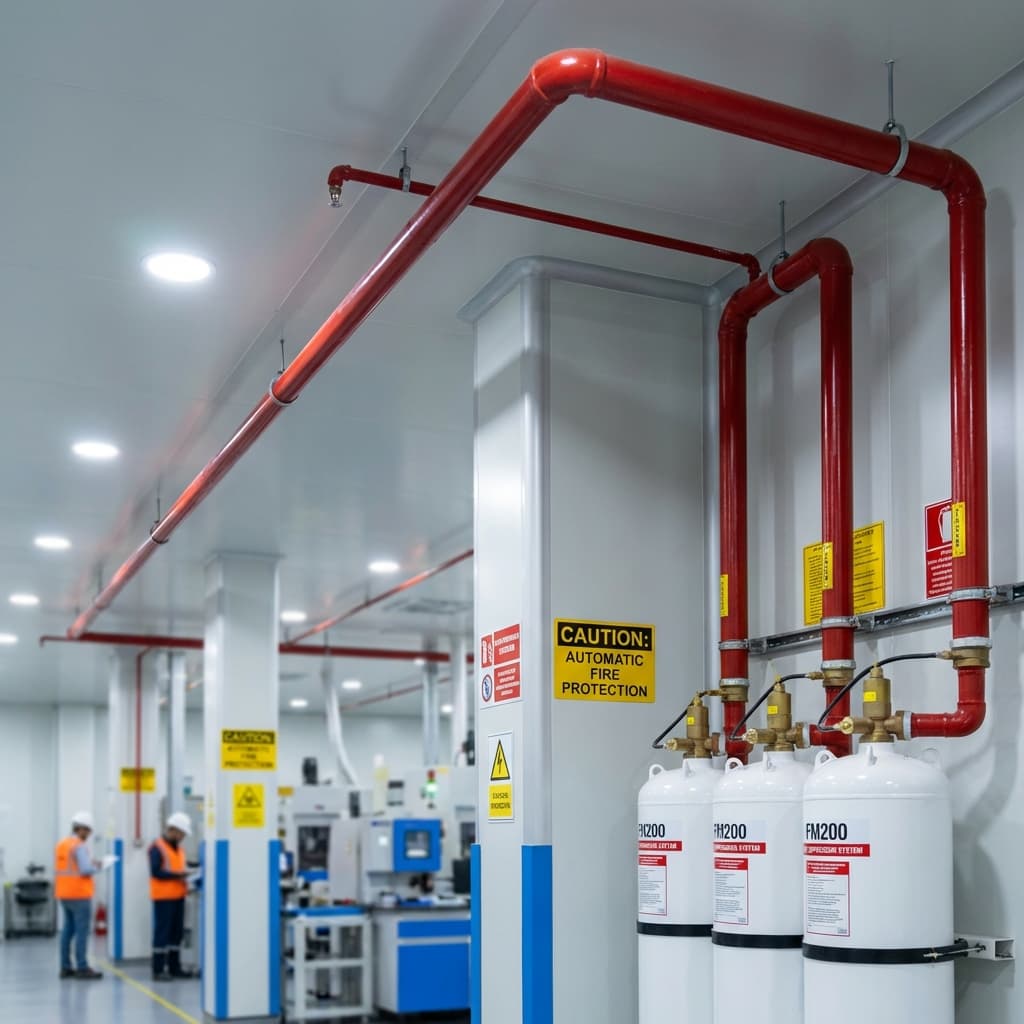
Industrial safety is under scrutiny like never before. With evolving NFPA codes and stricter local civil defense regulations, facility managers must fundamentally rethink their approach to fire protection. It's no longer just about having sprinklers and satisfying an inspector; it's about implementing intelligent detection systems, rapid damage-free suppression technologies, and comprehensive life safety strategies that ensure both business continuity and human safety.
Understanding Modern Fire Protection Philosophy
The evolution of fire protection has shifted from purely reactive measures to a proactive, risk-based approach. Modern Fire Fighting Systems are designed around the principle of defense in depth—multiple layers of protection that work together to detect, contain, suppress, and manage fire events while protecting both lives and assets.
This philosophy recognizes that different spaces have different risk profiles. A warehouse storing non-flammable goods has vastly different protection requirements than a pharmaceutical clean room or a data center. The key is matching the protection strategy to the specific risks and recovery requirements of each environment.
Beyond Water: The Rise of Clean Agent Suppression
In server rooms, electrical substations, healthcare archives, museums, and telecommunications facilities, water damage from a traditional sprinkler activation can be as destructive to assets as the fire itself. A single sprinkler head can discharge 50-150 liters per minute—catastrophic for electronic equipment, irreplaceable documents, or sensitive artwork.
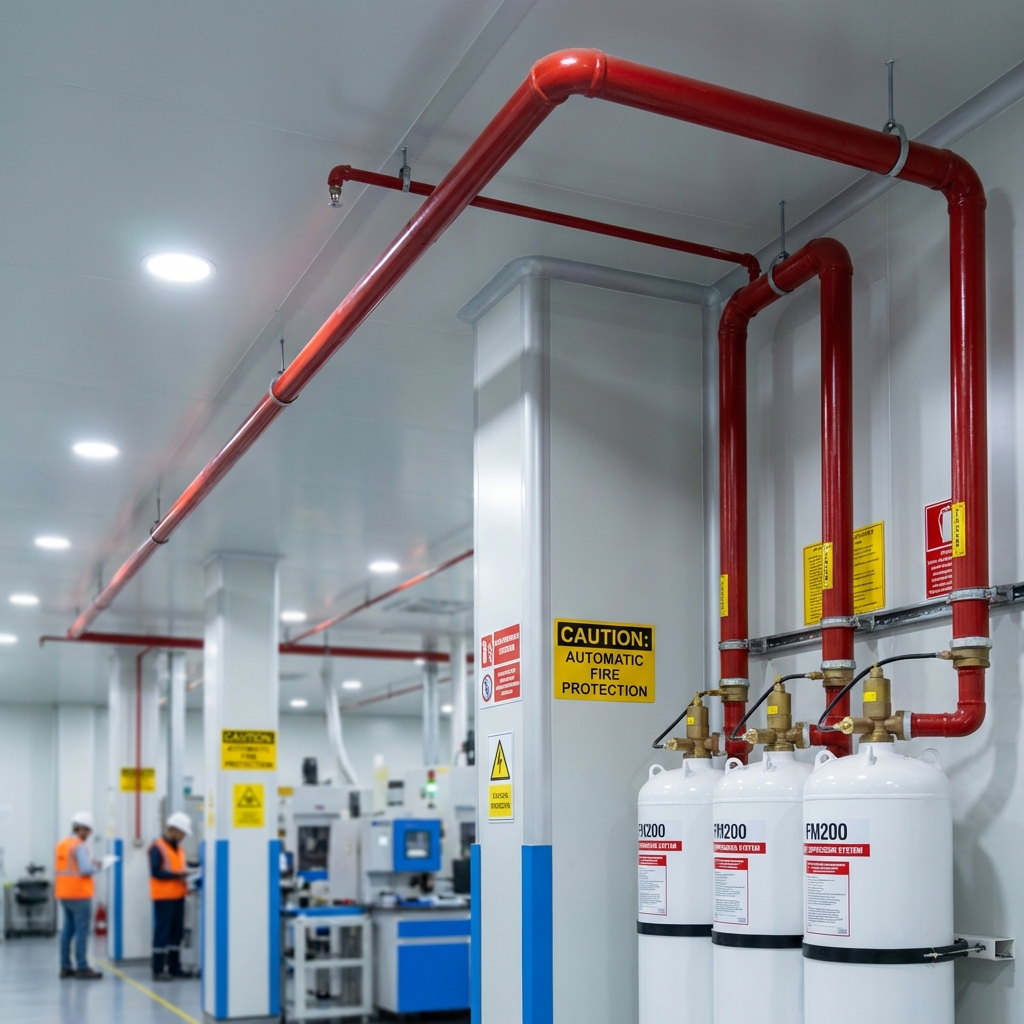
This realization has driven the rapid adoption of clean agent systems. These sophisticated suppression technologies include FM200 (HFC-227ea), Novec 1230 (FK-5-1-12), and various inert gas mixtures (IG-541 Inergen, IG-55 Argonite). Each has specific advantages depending on the application, environmental considerations, and local regulations.
Clean agent systems work on fundamentally different principles than water-based suppression. They extinguish fires either chemically—by interrupting the combustion chain reaction at the molecular level—or physically—by reducing oxygen concentration or absorbing heat energy. Most importantly, they accomplish this within 10 seconds of discharge, stopping fires before significant damage occurs.
The key advantages are clear: these agents are non-conductive, leave no residue, and don't cause secondary damage. Electronics can continue to operate during discharge or be restarted immediately afterward. For facilities where downtime costs thousands per minute, this capability is invaluable.
Comparing Clean Agent Technologies
- FM200 (HFC-227ea): Fast-acting chemical agent with excellent fire suppression performance. Requires less storage space than inert gases. Environmentally, it has zero ozone depletion potential but a measurable global warming potential.
- Novec 1230: The newest generation of clean agents with a much lower global warming potential (GWP of 1 vs. 3220 for FM200). Slightly larger storage requirements but increasingly preferred for new installations due to environmental regulations.
- Inert Gases (IG-541/IG-55): Blend of naturally occurring gases (nitrogen, argon, CO2) that reduce oxygen concentration to levels that won't support combustion but remain safe for human occupancy. Zero GWP and unlimited atmospheric lifetime make them the greenest option.
Early Warning: Time is the Enemy
The key to saving lives and assets is speed. In fire protection, every second counts. Traditional smoke detectors—while effective for residential and light commercial applications—often trigger only after a fire has grown to visible and dangerous proportions. By then, significant damage may already be underway.
Modern Aspirating Smoke Detection (ASD) systems revolutionize early warning capabilities. These sophisticated systems actively "sniff" the air through a network of sampling pipes that continuously draw air back to a highly sensitive central detector. Technologies like VESDA (Very Early Smoke Detection Apparatus) can detect smoke at concentrations 1,000 times lower than conventional spot detectors.
- Extreme Sensitivity: ASD systems can detect smoldering cables, overheating electrical connections, and pyrolysis products before any visible smoke or flame appears. This "very early warning" capability provides critical time for investigation and intervention.
- Configurable Alert Levels: Multiple threshold settings allow progressive response—from "Alert" (investigate) to "Action" (prepare evacuation) to "Fire" (activate suppression). This reduces false alarms while ensuring genuine threats receive immediate attention.
- Challenging Environments: ASD systems excel in environments where conventional detectors struggle: high ceilings, dusty warehouses, cold storage facilities, and areas with high airflow that would dilute smoke before reaching spot detectors.
- Integration Capability: When integrated with comprehensive fire alarm control panels and building management systems, ASD provides the precious minutes needed for manual investigation, orderly evacuation, or pre-emptive system shutdown.
The NFPA Framework: Standards You Must Know
Understanding the regulatory landscape is essential for compliance and effective protection. The National Fire Protection Association (NFPA) provides the technical foundation for fire codes worldwide. Key standards include:
- NFPA 13: The definitive standard for sprinkler system installation. Covers system design, hydraulic calculations, pipe sizing, and installation requirements for all occupancy types.
- NFPA 72: National Fire Alarm and Signaling Code. Governs detection, notification, and monitoring systems. Recent editions emphasize mass notification and emergency communications integration.
- NFPA 2001: Clean Agent Fire Extinguishing Systems. Specifies design concentrations, discharge times, room integrity requirements, and safety considerations for gaseous suppression systems.
- NFPA 750: Water Mist Fire Protection Systems. An increasingly popular alternative that uses fine water droplets for efficient suppression with minimal water damage.
In the MENA region, local civil defense authorities adopt and adapt these international standards. Egypt's National Building Code, UAE Fire and Life Safety Code, and Saudi Building Code all reference NFPA while adding region-specific requirements. Understanding both the international foundation and local amendments is essential.
The Maintenance Gap: Your System's Hidden Vulnerability
Installing a state-of-the-art fire protection system is step one. Maintaining it properly is a perpetual commitment that many organizations neglect. We frequently encounter systems across the region that haven't been tested in years—pumps that won't start, valves frozen shut, detection systems with expired sensors, and suppression tanks with inadequate pressure.
An unmaintained fire protection system is worse than no system at all because it creates a false sense of security. Building occupants and management assume protection exists when, in reality, the system may fail when needed most. Regular testing and maintenance are not optional—they are legal requirements and moral imperatives.
Critical maintenance activities include:
- Hydraulic Calculations Review: Any change to building layout, storage arrangements, or occupancy type may invalidate original hydraulic calculations. Systems designed for a light hazard office may be inadequate after conversion to high-rack storage.
- Pump Testing: Fire pumps require weekly churn tests (no-flow), monthly flow tests, and annual full-load performance tests. Pump curves must be compared against original commissioning data to identify degradation.
- Room Integrity Testing: For gaseous suppression systems, room integrity (door fan) tests verify that protected enclosures will hold agent concentration long enough for extinguishment. Leakage from unsealed penetrations, damaged door seals, or HVAC openings can cause system failure.
- Detection System Verification: Smoke detectors, heat detectors, and aspirating systems all require periodic sensitivity testing. Detectors drift over time and may become either too sensitive (causing false alarms) or too insensitive (missing real fires).
Manager's Safety Checklist
- Are your hydraulic calculations updated for any layout changes?
- When was your last "Room Integrity Test" for gas suppression zones?
- Is your fire panel showing any "Trouble" signals that have been ignored?
- Have all fire extinguishers been serviced within the required intervals?
- Are emergency evacuation routes clear and properly marked?
- When did staff last receive fire safety training?
Integration with Building Systems
Modern fire protection doesn't exist in isolation. Integration with Electrical Systems and HVAC Systems creates a coordinated emergency response. Upon fire detection, integrated systems can automatically:
- Shut down air handling units to prevent smoke spread through ductwork
- Activate smoke exhaust fans and stairwell pressurization systems
- Close fire/smoke dampers at zone boundaries
- Recall elevators to designated floors and lock out service
- Unlock access control doors along evacuation routes
- Switch emergency lighting circuits and activate voice evacuation systems
- Notify monitoring stations and emergency services automatically
At Khebraat, we emphasize that compliance is not merely a checkbox—it's a culture of safety that permeates every aspect of facility management. We maintain rigid adherence to Civil Defense regulations in all our jurisdictions, ensuring that our clients' assets and occupants are protected by properly designed, installed, and maintained systems.